

NETWORK DEVICE ADMINISTRATION · 30 OCTOBER 2026
TACACS+ device administration: an AAA commissioning worksheet
Central login is only one part of administrative access control. A production design must separately prove who can sign in, what each role may do, which commands are recorded, how servers fail over and how authorized engineers recover access without creating a permanent back door.
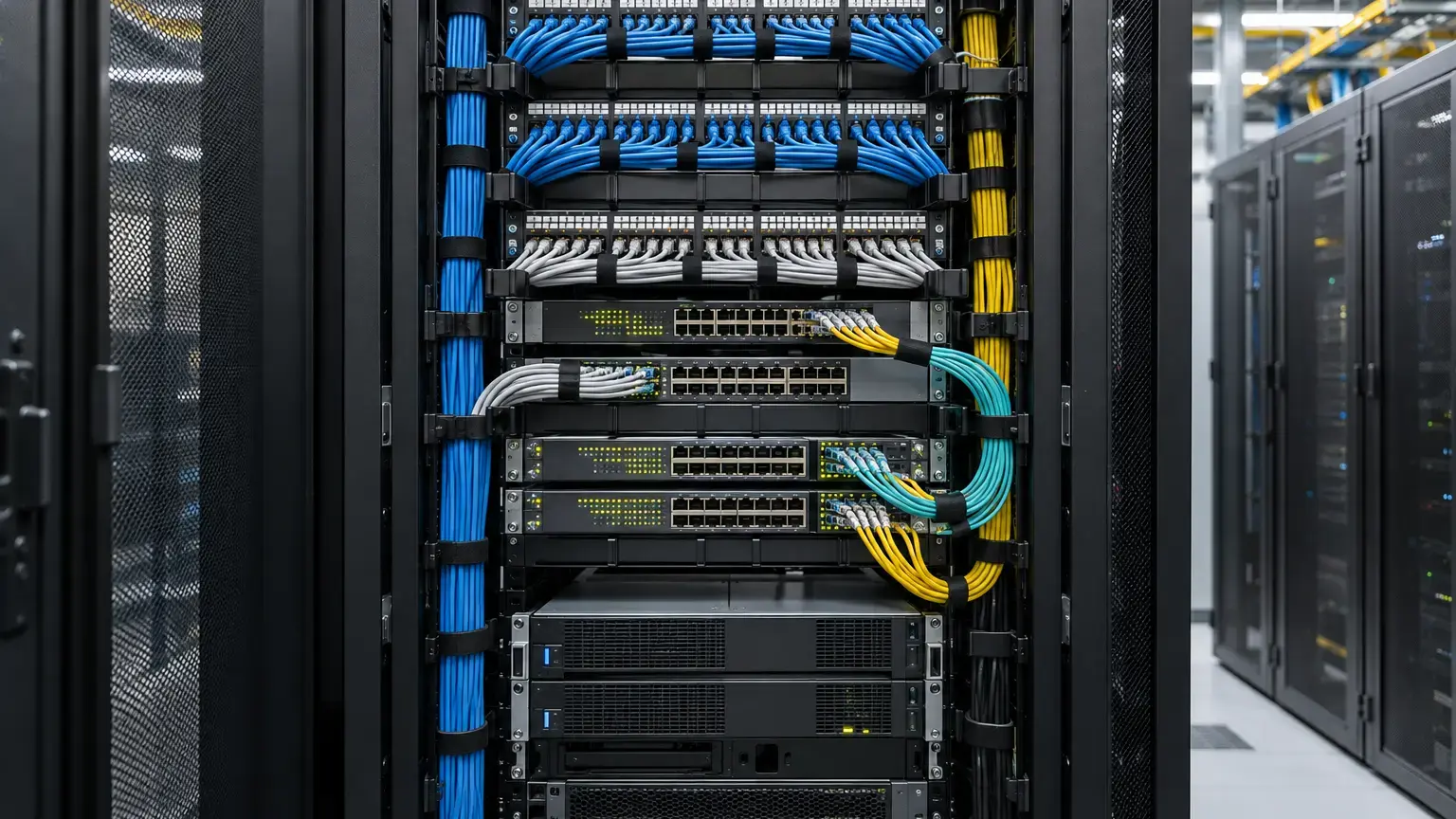
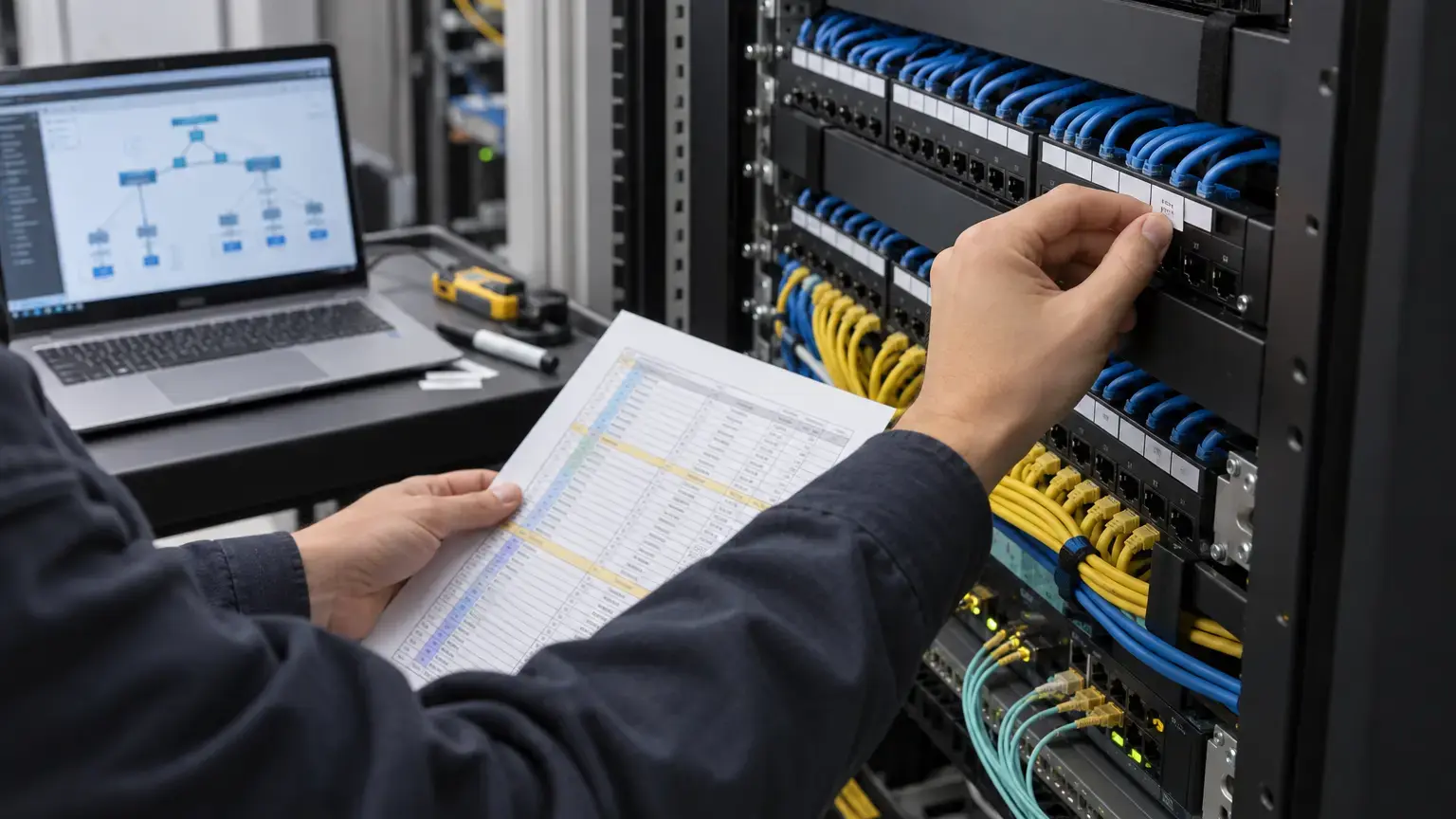
Visual reference photographs

Separate authentication, authorization and accounting
RFC 8907 describes TACACS+ as three related functions. Authentication identifies the administrator. Authorization decides what that administrator may do. Accounting records the session and actions. A successful centralized login proves only the first function unless the other two are configured and tested.
Build the acceptance plan around all three. A read-only user who can enter configuration mode is an authorization failure. An administrator whose changes never reach the audit server is an accounting failure.
AAA service row: device ID · login method list · authorization method list · accounting events · TACACS+ server group · local fallback · source address · management VRF · timeout · owner.
Use TACACS+ for device administration, not endpoint access
TACACS+ is widely used for administrative access to routers, switches and other infrastructure. It is distinct from wired or wireless endpoint admission, where RADIUS and 802.1X are commonly used. Keep device-admin policy, network-access policy, identities and logs separate even if they share an identity platform.
Define which interfaces accept SSH, HTTPS, API or console administration. Disable or restrict unused services. Central AAA does not compensate for management access exposed on production user VLANs.
Protect the transport path
RFC 8907 is explicit that TACACS+ packet protection is obfuscation, not modern encryption. It does not provide meaningful integrity, privacy, replay protection or forward secrecy. TACACS+ must therefore be deployed over a management network that provides privacy and integrity and is separated from ordinary traffic.
Use a dedicated management VRF, out-of-band network, encrypted overlay or other approved secure transport. Restrict server communication with firewalls or access lists. Document every point where the path crosses shared infrastructure.
Stabilize source address and routing
Choose a predictable source address, commonly a loopback or management interface, and authorize that address on the TACACS+ servers. Juniper documents source-address and routing-instance controls because a device with several paths can otherwise present a different client identity after failover.
Test routing from the selected management VRF to every server. Confirm the return path, firewall state, TCP port and network address translation behavior. A reachable server from a technician laptop does not prove that the switch's locally generated packets use the correct source and route.
Path row: device · source IP · source interface · VRF or routing instance · primary server · secondary server · TCP port · firewall policy · round-trip latency · path owner.
Design server order, timeout and total login delay
Use at least the redundancy required by the project and place servers so one site or power failure does not remove all administration. Record server order and whether the platform uses priority, sequential failover or another method.
Timeouts that are too short create false failures on a congested management path. Timeouts that are too long can make console recovery painful. Estimate the worst authentication delay:
Worst server wait = servers attempted × retries per server × timeout per attempt
Estimated login recovery = worst server wait + local fallback processing + operator entry time
Example: two servers, two attempts and a 3-second timeout can consume about 12 seconds before fallback, excluding implementation details. This is illustrative. Measure the actual device and software behavior.
Create role and command policy before enabling enforcement
Define administrative roles such as monitoring, operations, security, network engineering and emergency recovery. List the commands or configuration areas each role must use. Avoid one universal full-privilege group.
TACACS+ supports fine-grained authorization, including individual command decisions on capable platforms. Test both permitted and denied actions. Confirm that denial messages are usable and that a blocked command does not partially apply.
Role test row: identity group · device class · login result · privilege or role · permitted command · denied command · configuration result · audit record · exception.
Keep a controlled break-glass path
Cisco documents fallback to local or enable authentication when TACACS+ servers are unavailable. A local break-glass account can prevent a lockout, but it creates credentials that must be protected and maintained across devices.
Use named local accounts where the platform supports secure password storage and individual accountability. Keep credentials in an approved vault, rotate them, limit who can retrieve them and alert on use. Do not configure unconditional local-first authentication, which would bypass central policy during normal operation.
Stage method lists to avoid self-lockout
Prepare out-of-band console access and keep the existing verified session open. Add servers and test basic reachability before making TACACS+ the default. Apply a pilot method list to a limited line, interface or test device where supported.
Prove one central administrator, one read-only user and the local emergency account before expanding. Save a rollback command set. Never end the last privileged session until a new login and authorization test succeed.
Commission accounting as an audit chain
RFC 8907 defines start, stop and update accounting records. Platforms can also record logins, configuration changes and interactive commands. Juniper documents events including login, change-log and interactive commands. Select the events required by the security policy.
Confirm the central record includes device identity, source address, username, timestamp, session, command or change and result where available. Synchronize devices and servers to approved time sources. Without consistent time, incident reconstruction becomes unreliable.
Review accounting output for secrets. RFC 8907 warns that some clients may send sensitive values in logs. Redact, suppress or restrict hazardous command content according to platform capability and operational policy.
Do not treat TACACS+ logs as tamper-proof
Because TACACS+ does not provide modern transport integrity, an attacker on the path may alter accounting traffic. Protect the management transport, harden the server, restrict log access and forward records to a secured logging platform where required.
Monitor for failed logins, denied commands, server timeouts, fallback use, repeated shared-secret errors and devices that stop sending accounting. An absence of logs can be a failure signal, not proof that no changes occurred.
Run controlled failure tests
During an approved window, block or stop the primary server and verify secondary-server use. Then make all central servers unavailable and measure the intended fallback delay. Confirm that the emergency account works through the approved access path and that normal users do not gain unintended local access.
Restore services and confirm the device returns to central authentication without a reboot. Check whether sessions established during an outage remain active and how their commands are accounted for.
Test partial failures, not only total outages
A server can accept TCP but fail to answer authentication, answer authentication but fail authorization, or accept accounting without storing it. Test the exact platform behavior for reject, error and timeout responses. A deliberate access denial must not trigger local fallback as though the server were unreachable.
Verify shared-secret mismatch alarms, source-address mismatch, wrong VRF, DNS failure if names are used and clock skew where the identity platform depends on accurate time.
Commissioning worksheet
- Administrative interfaces and permitted source networks are documented.
- Authentication, authorization and accounting are tested separately.
- TACACS+ traffic uses a protected, separated management path.
- Each device has a stable source address and routing instance.
- Primary and secondary server paths are proven.
- Timeout, retry and worst login delay are measured.
- Role definitions use least privilege.
- Permitted and denied commands are tested for every critical role.
- Method-list order does not bypass central policy in normal operation.
- A controlled break-glass account exists and is vaulted.
- Break-glass use creates an alert and rotation obligation.
- Out-of-band console access and rollback are ready before activation.
- Login, configuration and command accounting meet the audit plan.
- Device and server timestamps are synchronized.
- Accounting records do not expose unapproved secrets.
- Primary-server loss fails over to the secondary server.
- Total server loss produces the intended fallback without lockout.
- Reject, timeout, error, recovery and missing-log conditions enter the handover pack.
Minimum handover pack
Provide the management-network diagram, device inventory, AAA method lists, server-group and source-address records, firewall schedule, timeout calculation, role and command matrix, secret-custody references, local fallback procedure, positive and negative tests, accounting samples, server-failure results, recovery timing, monitoring thresholds and rollback plan. Link this to the wired NAC worksheet, MACsec uplink worksheet and network documentation worksheet.
Primary technical references
- IETF RFC 8907: The TACACS+ Protocol
- Cisco: IOS XE Software Hardening Guide
- Juniper: TACACS+ authentication and accounting
- Juniper: TACACS+ source, timeout and routing controls
- HPE Aruba Networking: Configuring AAA for AOS-CX
- HPE Aruba Networking: AAA server-group reference
Centralizing administration for switches, routers or firewalls?
Share the device models, management network, identity platform, administrator roles, server locations and audit requirements. We can coordinate AAA policy, secure paths, staged activation, failure tests and handover evidence.
Discuss network administration security ↗