

PON MIGRATION ENGINEERING · 29 OCTOBER 2026
GPON to XGS-PON coexistence migration: a field acceptance worksheet
A building or operator network does not always need a disruptive, all-at-once replacement to introduce 10 Gbit/s services. GPON and XGS-PON can share an optical distribution network when the wavelength plan, coexistence hardware, optical margin, splitter path and active equipment are engineered as one system. This worksheet turns that migration into a controlled, reversible field activity.
Visual reference photographs


Start with the migration method, not the 10G label
ITU-T G.9805 describes three broad coexistence methods: an external coexistence element, a multi-PON module with integrated wavelength combining, and a splitter-based method. The correct choice depends on the installed OLT, planned line cards, rack space, patching, loss budget, operational model and vendor support.
An external coexistence element combines and separates the GPON and XGS-PON wavelength bands before the common feeder. A multi-PON port can integrate that function and reduce external components. A full replacement moves every subscriber and removes coexistence, but demands a larger coordinated outage. Freeze the chosen architecture and exact supported SKUs before field work.
Migration architecture row: site · existing OLT and port · new OLT or multi-PON port · coexistence method · CEx or module SKU · common ODN port · splitter path · legacy ONT count · migration batches · rollback owner.
Keep the wavelength plans explicit
The common XGS-PON wavelength plan uses the XG-PON bands, with upstream in 1260 to 1280 nm and downstream in 1575 to 1580 nm, extended to 1581 nm for outdoor application. GPON uses different bands, allowing both systems to operate on the same fiber through an appropriate wavelength combiner. Do not treat every WDM component as suitable merely because its connectors fit.
ITU-T G.9807.1 also defines an optional XGS-PON wavelength set that reuses GPON bands for deployments without legacy GPON in that area. That option is not a coexistence shortcut for an occupied GPON ODN. Record the wavelength option of the OLT optics, ONTs and coexistence hardware.
Audit the legacy ODN before promising migration
Reusing the outside plant saves civil work only if its records and condition are trustworthy. Map the OLT port, feeder core, coexistence location, every splitter stage, connector pair, splice, branch and ONT. Reconcile database records with labels in racks, cabinets, floor boxes and customer outlets. Resolve unknown splitters, undocumented repairs, mixed APC and UPC interfaces, excessive bends and open ports.
Collect baseline insertion loss and OTDR traces using an approved method and safe wavelength plan. Do not connect an ordinary unfiltered OTDR to a live PON. Keep passive-fiber acceptance separate from live OLT and ONT optical readings.
Add the coexistence loss to every branch budget
A coexistence element introduces product-specific insertion loss. That loss is added to an ODN already containing fiber, splitters, splices and connectors. Calculate the path separately for GPON and XGS-PON because wavelengths, transceiver classes and component specifications differ.
Predicted ODN loss = fiber loss + splitter loss + connector loss + splice loss + coexistence-element loss + other passive loss
Operating margin = permitted optical path loss for the selected class - predicted ODN loss
Use the exact OLT, ONT, splitter and coexistence-element datasheets. ITU-T G.9807.1 provides XGS-PON optical path loss classes, including nominal budgets around 28 or 29 dB and higher classes, but that does not authorize mixing equipment classes. Both ends and the ODN must support the chosen class.
Calculate the shortest path too. A path can fail by receiver overload as well as insufficient power. Compare predicted and measured receive power with both minimum and maximum limits.
Build a per-subscriber migration register
Every subscriber branch needs an identity that survives the technology change. Record property, flat or business, splitter and output, ONT serial, current service profile, VLANs, voice or IPTV dependencies, optical readings, appointment window and rollback status. Preserve the GPON record until the XGS-PON service is accepted.
Subscriber row: account or service ID · building and unit · splitter output · GPON ONT serial · baseline Rx level · XGS-PON ONT serial · target profile · VLAN and service map · migration time · new Rx level · tests · exception or rollback.
Commission the common path before moving customers
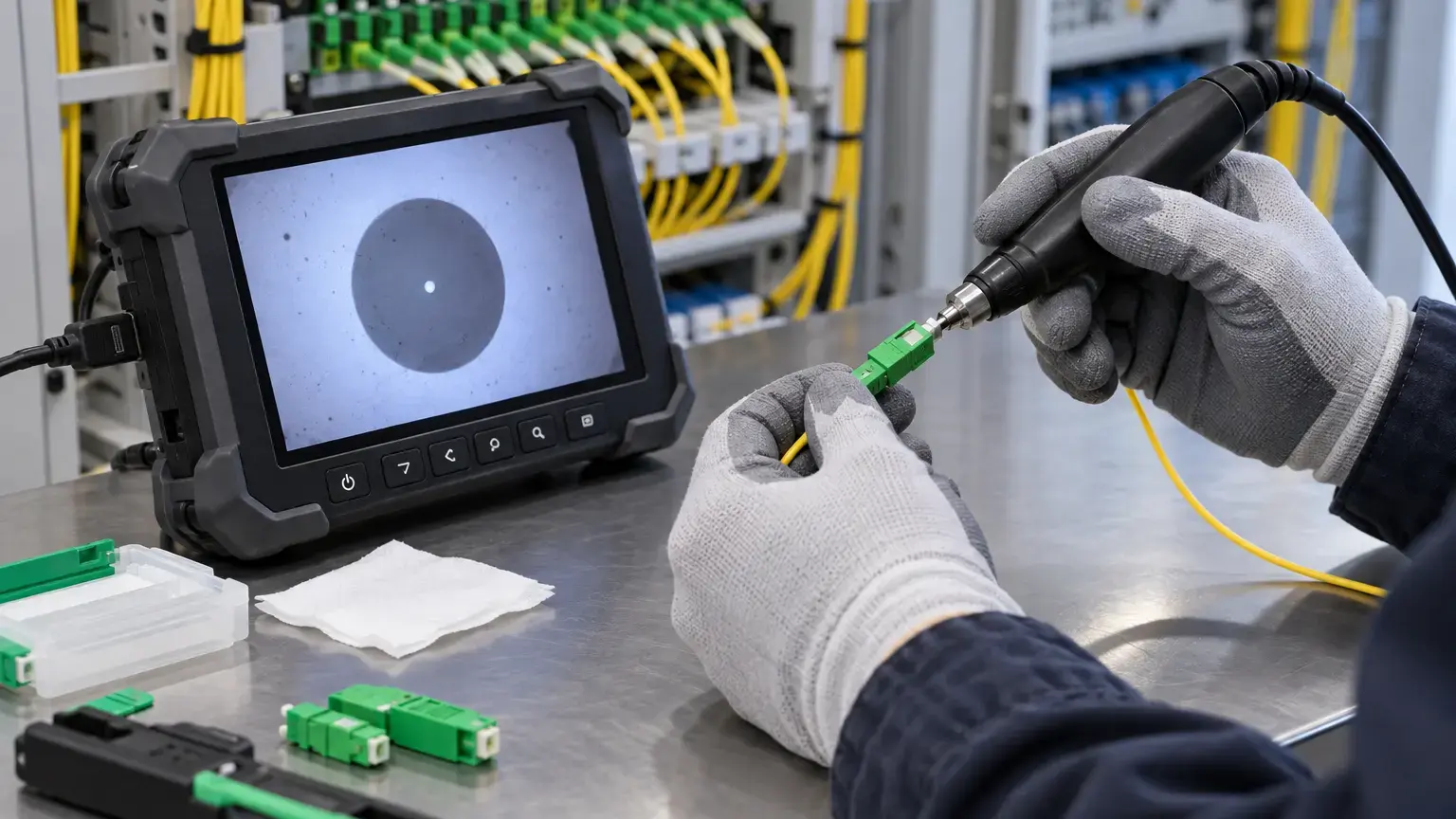
Install the coexistence element or multi-PON optics under the vendor procedure. Inspect, clean and reinspect all disturbed connectors. Confirm port mapping and patch polarity, then measure the additional passive loss where the method permits. Verify that legacy GPON ONTs remain registered and stable after the common path changes.
Test a representative GPON sample across short, long and high-loss branches. Check optical levels, registration, traffic, voice and IPTV where applicable. A migration design that activates XGS-PON but quietly reduces GPON margin is not acceptable.
Pilot XGS-PON on representative branches
Select pilot branches that cover the real ODN, not only the closest subscriber. Include different splitters, distances, building risers and loss conditions. Confirm that the ONT model, software and provisioning system are supported by the OLT. Record serial-number registration, authentication, service profile, VLAN behavior, management reachability and firmware.
Measure downstream and upstream service, latency and packet loss using a test endpoint capable of the intended rate. A 1 Gbit/s laptop port cannot prove a multi-gigabit service. Document the test server, interface speed, protocol, concurrent load and bottlenecks.
Check coexistence in both directions
Run simultaneous GPON and XGS-PON traffic on the shared ODN. Confirm that activating, rebooting or replacing one technology's ONT does not disturb the other. Review OLT alarms, optical levels, errored frames, registration events and unexpected flaps.
ITU-T G.9807.1 includes out-of-band noise requirements intended to reduce impact on coexisting systems. Field teams cannot infer compliance from a power-meter reading alone. Use supported optics and ONTs, current firmware and vendor interoperability evidence rather than mixing unverified devices.
Protect live testing and troubleshooting
A standard GPON power meter may not isolate every coexistence wavelength correctly. Use an instrument and filter set specified for the active wavelength plan. Label test ports clearly and follow laser-safety and change-control procedures. Never disconnect the common ODN port simply to identify a subscriber.
If a migrated ONT fails, troubleshoot in layers: provisioning and authentication, service profile, patching, connector condition, wavelength-compatible measurement, branch loss, splitter output, coexistence port mapping and equipment support. Change one controlled variable at a time.
Define rollback before each batch
Rollback must restore the original GPON ONT, provisioning, patching and service profile without guessing. Set a decision time and objective triggers, such as registration failure, optical power outside the approved range, missing voice, unstable traffic or unapproved impact on legacy GPON users.
Do not remove the old ONT record, serial assignment or patch schedule until the new service passes. Keep spare approved ONTs and clean patch cords at the migration location. Record every rollback as evidence for correcting the next batch.
Field acceptance worksheet
- The selected coexistence method and supported hardware SKUs are approved.
- GPON and XGS-PON wavelength options are recorded.
- OLT, feeder, splitters, branches and ONTs have stable IDs.
- Legacy ODN records match physical labels and patching.
- Connector polish, splitters and passive components support the wavelength plan.
- Baseline insertion loss and trace records are preserved.
- Coexistence-element loss is included in both technology budgets.
- Shortest and longest branches are checked for overload and sensitivity.
- OLT and ONT optical path loss classes are compatible.
- Legacy GPON registration and services remain stable after common-path work.
- Pilot XGS-PON branches represent different distances and splitters.
- ONT authentication, firmware, profiles and management are recorded.
- Service tests use endpoints capable of the intended rate.
- Simultaneous GPON and XGS-PON traffic is observed.
- Alarms, optical levels, errors and registration events are reviewed.
- Test instruments support the active wavelength plan.
- Each subscriber has an approved rollback record and trigger.
- Final branch readings, service results and exceptions enter the handover pack.
Minimum handover pack
Provide the migration architecture, wavelength plan, OLT and ONT compatibility evidence, coexistence-element datasheet, rack and patch schedule, ODN and splitter map, per-branch optical budgets, baseline test files, subscriber register, provisioning templates, GPON continuity results, XGS-PON pilot results, simultaneous-load evidence, alarm review, rollback record and final as-built revisions. Link this record to the splitter acceptance worksheet, FTTH testing guide and fiber core and route record.
Primary technical references
- ITU-T G.9807.1 (2023) Amendment 1 (2025): XGS-PON
- ITU-T G.9805 (2022) Amendment 2 (2025): PON coexistence
- ITU-T recommendation database: G.9807.1
- ITU-T recommendation database: G.9805
- Nokia: Next-generation PON evolution strategies
- ZTE: XGS-PON technical white paper
Planning a GPON to XGS-PON migration?
Share the OLT models, subscriber count, splitter layout, branch-loss records, service profiles and migration window. We can coordinate ODN audits, optical budgets, patching, field testing and handover records around the approved platform design.
Discuss PON migration engineering ↗